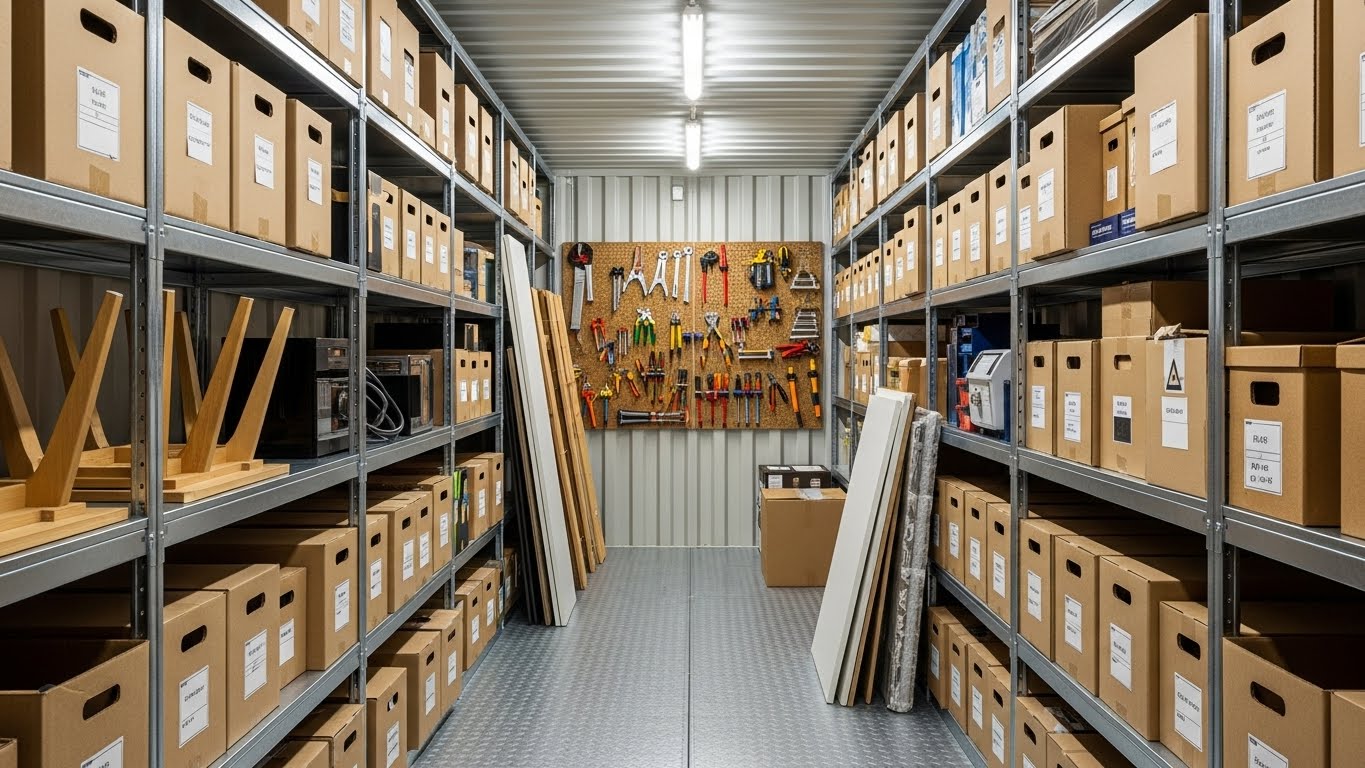
We break down purchase + delivery + site prep + resale risk versus on-site flat-pack pricing—so choosing between Flat-Pack Containers and Used Shipping Containers in New Brunswick & the Atlantic Region is straightforward.
If you’re debating Flat-Pack Containers vs. Used Shipping Containers, you’re probably trying to balance cost, convenience, and what actually fits your property. This core guide lays out the decision in plain language—grounded in how customers across New Brunswick actually use storage. You’ll see what drives total cost, what matters for access and permits, and where each option shines. Then we’ll show how Alloy Storage supports both on-site and yard solutions so you can move forward with confidence.
Quick orientation: what you’re really comparing
When people say “flat-pack vs. sea can,” they’re usually weighing two very different paths:
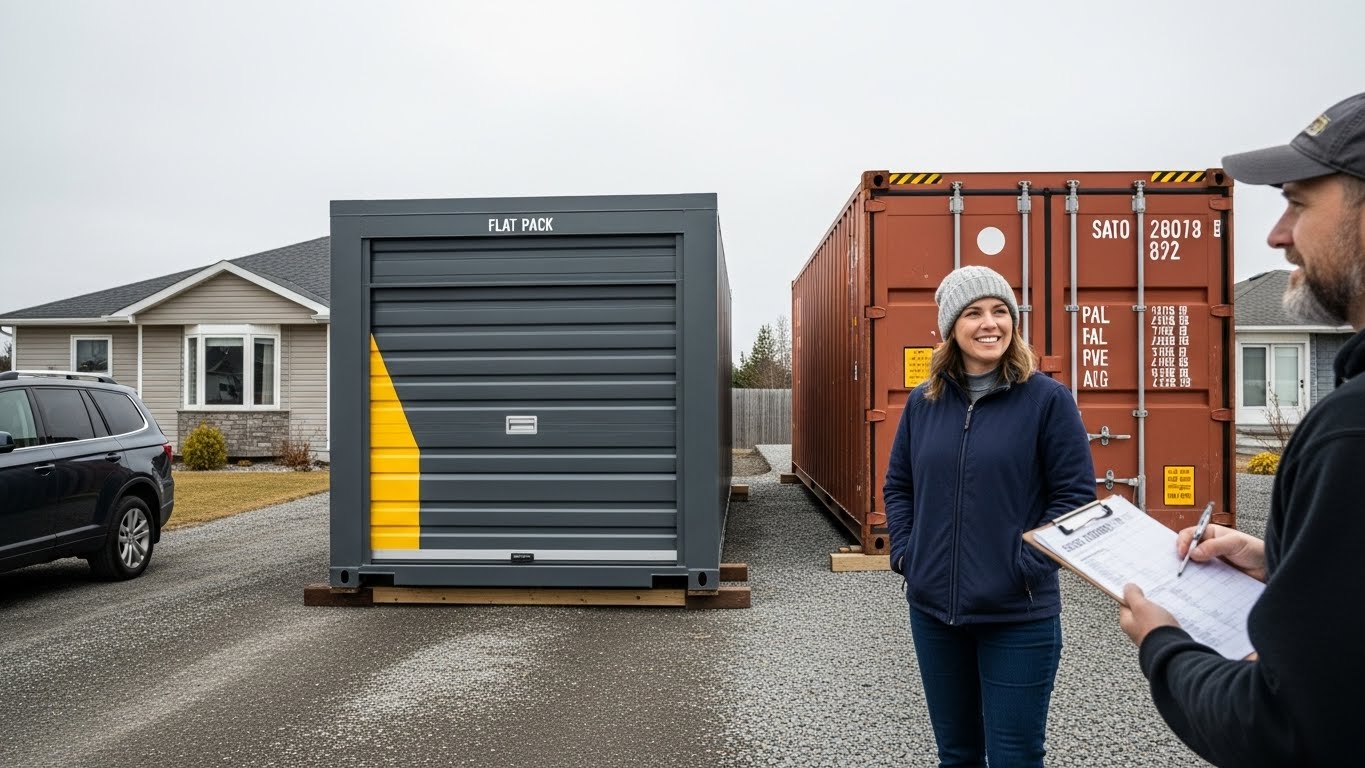
- Flat-Pack Containers (on your property): Delivered as a kit and assembled where you need it—perfect for tight driveways or small pads. Designed for temporary or medium-term on-site storage during moves, renovations, or seasonal work.
- Used Shipping Containers (purchase): A welded ISO steel box (often 20′ or 40′) delivered as a whole unit. Great when access is easy, you want maximum ruggedness, and you’re comfortable owning the container long-term—or placing it in a storage yard instead of your driveway.
The right choice depends on total cost, property access, weather/security needs, municipal rules, and how long you actually need storage.
The honest cost comparison (Money motive, minus the guesswork)
If you’re considering a Used Shipping Container (purchase)
You’ll want a realistic budget that includes:
- Purchase price (condition grade matters; cosmetic dings vs. structural issues)
- Delivery & placement (distance, truck type, turning radius)
- Site prep (gravel pad or timber sleepers so doors stay true)
- Accessories (new lock, lock-box, vents, paint/touch-ups)
- Resale or removal later (time + transport if you no longer want it)
Who this path suits: rural/large lots with easy access, long-term storage needs, contractors who will reuse the container on multiple projects, or anyone planning to convert it into a permanent outbuilding (with approvals)
If you’re considering a Flat-Pack Container (on-site kit)
Plan for:
- Flat-pack delivery (compact truck footprint)
- On-site assembly (fast, tidy install; minimal disruption)
- Monthly rate or fixed term (depending on your plan)
- Pickup when done (no resale hassle)
- Optional add-ons (shelving, moisture control, lock-box)
Who this path suits: suburban driveways and infill lots, short- to medium-term projects (moves/renos), tidy residential appearance, and anyone who wants storage right at the door without owning a giant steel box forever.
Takeaway: If you only need storage for a season or two—and your driveway is tight—flat-pack often wins on total cost + convenience. If you need rugged capacity for years, used shipping containers can win on long-term economics, provided access is easy and bylaws allow it.
Access & placement: does it actually fit your property?
Flat-Pack Containers: built for tight sites
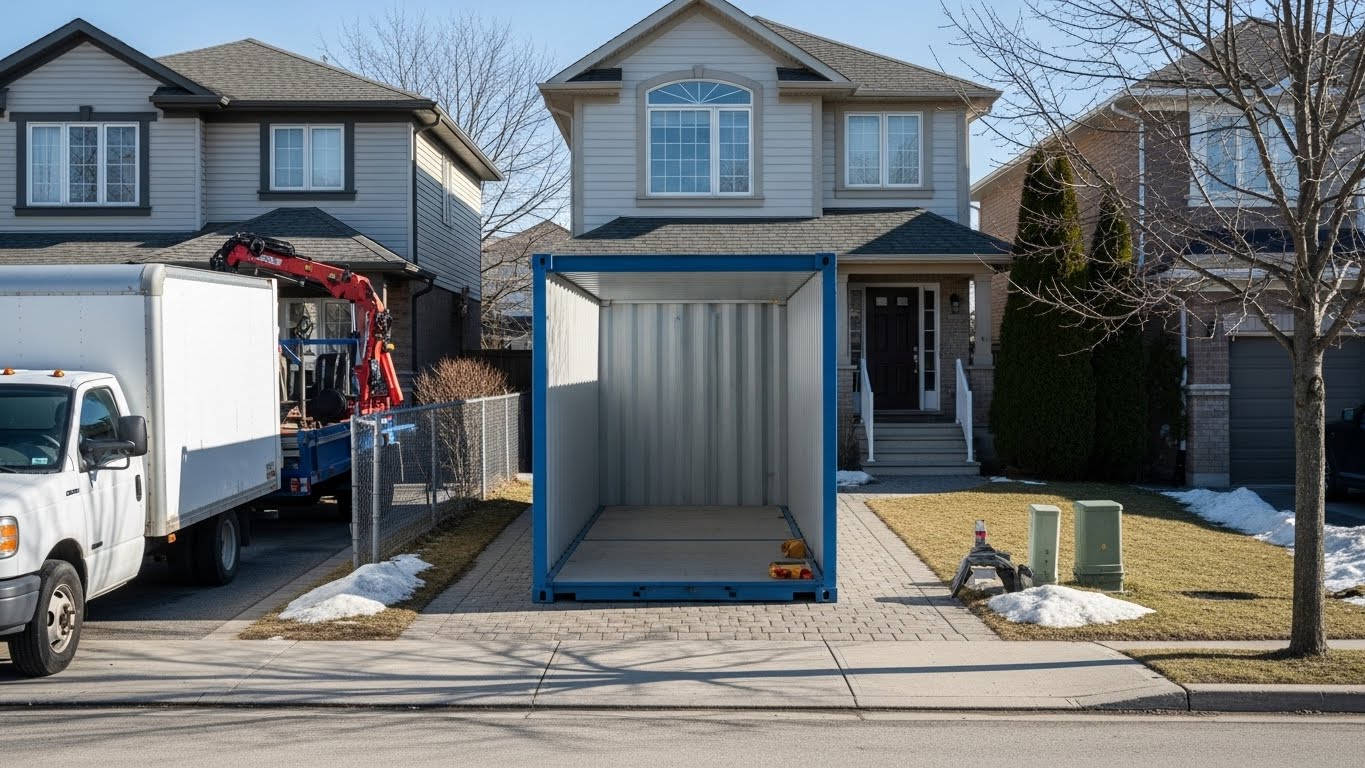
- Arrive as a kit and are assembled on site, which means delivery vehicles need far less overhead and turning space.
- Ideal for driveways, side yards, and back-of-lot locations that a full 20′ or 40′ container simply can’t reach.
- Flexible door orientation and positioning during assembly to suit how you’ll load.
Used Shipping Containers: placement realities
- A 20′ or 40′ sea can requires straight-line clearance and room for the truck to back in and set down the unit.
- Driveways must be strong and level enough for the truck and container; overhead lines/branches can be a hard stop.
- Short-term use on grass or soft ground usually needs pads/sleepers and drainage planning.
Access test: Share a couple of site photos with Alloy Storage. We’ll tell you—honestly—which option fits and how to prepare the surface so doors open smoothly year-round.
Durability, weather & security: which is “stronger”?
Used Shipping Containers (ISO)
- Welded corten steel with heavy corner posts; built for ocean service.
- Excellent impact resistance and long-term rigidity when sited correctly.
- Pair with a lock-box for tamper resistance; add vents if you’re storing soft goods long-term.
Flat-Pack Containers
- Weather-built for Canadian conditions; engineered panels with tight seams and reliable door seals.
- Rodent-resistant design; tidy loading practices (sealed bins, clean floors) minimize risk.
- Plenty durable for residential and light-commercial storage on a small footprint—without the heavy logistics of a sea can.
Reality check: If your project demands industrial ruggedness and you’ve got room, a used shipping container is hard to beat. If your priority is clean on-site access and minimal disruption, a flat-pack is the fast, tidy answer.
Permits & bylaws in New Brunswick (confidence before you book)
Rules vary by municipality. Here’s a simple way to think about it:
- Temporary on-site storage (moves/renos) is often treated differently from permanent structures.
- Street placement or extended durations may require a permit or adherence to setbacks/visibility rules.
- Conversions (e.g., using a sea can as a workshop or dwelling) almost always trigger full building approvals.
- HOA/strata policies can be stricter than municipal rules—best to check.
How Alloy helps: we provide a New Brunswick quick-check with the correct office to call and typical questions to ask, so you don’t lose time. We’ll also flag when a yard container is a better fit than on-site placement.
When Flat-Pack Containers win (and why)
Choose Flat-Pack Containers when you want:
- On-site convenience in a tight driveway or small pad
- Short- or medium-term storage (weeks to months) without ownership headaches
- Predictable in/out dates tied to a renovation, staging, or move
- A tidy residential look with clean lines and flexible door orientation
- Minimal heavy-truck exposure on your property
Use cases: apartment/condo moves with limited parking, urban renos, seasonal gear rotation, short timeline between closings, e-commerce overflow at home, or mixed materials staging for a small crew.
When Used Shipping Containers win (and why)
Choose Used Shipping Containers when you want:
- Maximum ruggedness and long-term durability
- The economics of owning (and possibly re-using) a container for years
- High-volume capacity (20′ or 40′) and heavy items
- Straightforward access/turning space for delivery
- The option to keep it at a storage yard if your property has constraints
Use cases: rural properties with room to spare, contractors with recurring projects, restoration companies staging materials between jobs, or long-term equipment storage.
Right-sizing: how much space do you really need?
- Flat-Pack sizes (e.g., ~7×7, 7×10, 7×13, 7×16 ranges) are perfect for rooms-out moves, renos, and tidy inventory zones. Think: a couple of rooms’ furniture, boxed goods, tools, fixtures.
- Used Shipping Containers commonly come in 8×20 and 8×40 footprints—ideal for large multi-room moves, palletized inventory, or heavy equipment staging.
Fast path to a decision: tell us what you’re storing, how long, and where it will sit. We’ll suggest a size, share the price delta between options, and let you choose.
On-site vs. yard: you don’t have to pick just one
One of Alloy’s strengths is our dual offer. If on-site access is tight—or bylaws say “not here”—we can set you up with a Storage Yard Container at our Saint John facility. Many customers:
- Start in the yard while they sort or wait for permits, then
- Switch to a flat-pack on-site for the final push, or
- Buy a used container later once they know they’ll use the capacity long-term.
We’ll price both paths so you can compare apples to apples.
Make your container work harder (simple best practices)
- Plan the load: heavy items on the floor and toward the front; lighter items above.
- Keep a center aisle: reach the back without unloading everything.
- Shelving & pallets: better airflow, faster retrieval.
- Label by room/task: boxes and totes land in the right place on day one.
- Moisture control: avoid loading wet items; add desiccant packs for soft goods stored long-term.
A smooth process with Alloy (start to finish)
- Tell us your goal — move, reno, seasonal hold, or business overflow, and your ideal timeline.
- Share a quick site photo — driveway or pad; we’ll advise on fit, surface prep, and door orientation.
- Get an itemized quote — flat-pack on-site vs. yard vs. used container path (if you’re leaning that way).
- Schedule delivery or pickup — we place the unit, confirm level, and walk you through the basics.
- Switch paths if needed — change sizes or move from yard ↔ on-site as your project evolves.
FAQs (the questions we answer every week)
Will a used 20′ container crack my driveway?
The container itself sits on its corners or sleepers; the bigger concern is the delivery truck load and turning stress. If your driveway is delicate or tight, a flat-pack avoids heavy-truck load right at the curb.
Are flat-packs weather-tight enough for winter?
They’re designed for Canadian conditions with sealed doors and tight seams. For multi-month storage, level placement and simple moisture control keep contents happy.
How long can I keep a flat-pack on my property?
As long as your plan and local rules allow. We’ll share a municipal quick-check so you know what to ask before you book extended durations.
Can I resell a used container easily later?
Often yes, but factor in time, condition, and transport. If you’re unsure you’ll want it long-term, flat-pack on-site or yard storage avoids resale logistics.
Do you provide locks?
Yes—lock-box and quality padlock options. You can bring your own as well.
Why Alloy for Flat-Pack Containers and Used Shipping Containers info in NB
- Clarity from the first quote: we show rent, delivery/assembly, pickup (for flat-pack) or monthly/yard options line-by-line.
- Access expertise: photos + a short call are all we need to advise whether a flat-pack, yard, or used sea can fit your site and goals.
- Weather & security proof points: steel, weather-built units with lock-box options and practical loading guidance.
- Flexible paths: on-site Flat-Pack Containers, Storage Yard Containers, and guidance if you decide to purchase a used container.
- Local coverage: New Brunswick core routes with support across the Atlantic Region.
What to do next (three clear steps)
- Request your comparison quote — Flat-Pack on-site vs. Yard (and purchase guidance if you’re considering used).
- Send a quick site photo — we’ll confirm access, surface prep, and the right size.
- Book your start date — we’ll place the unit where you need it; you load at your pace.
You’ll have secure, on-site space when you want it—or a yard unit if that’s the smarter move—and a clear understanding of total cost either way.
Contact Alloy Storage
Alloy Storage
151 Alloy Drive, Saint John, NB, E2J 0C2
Phone: (506) 910-5400
Email: info@alloystorage.com
Website: alloystorage.com
Get an apples-to-apples quote: Flat-Pack vs. Used Shipping Container.
Tell us where you need storage and for how long. We’ll confirm access fit, itemized costs, and any NB bylaw checks worth making before you decide.
Call (506) 910-5400 or email info@alloystorage.com to get started.